


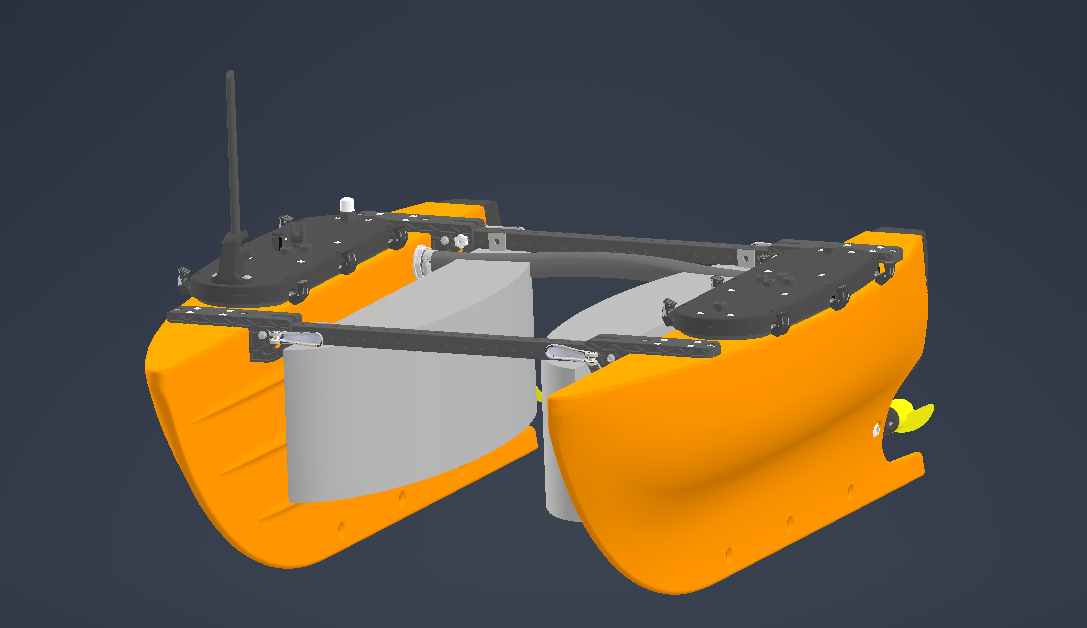
Payload Upgrade
Given the BlueBoat's low payload capacity as a new platform, incorporating all the necessary hardware presented major difficulties, the main one for the Mechanical team being meeting the vehicle's supported weight limit. To address this, two floats were developed that add up to 25 kg of additional capacity, significantly extending this limit. Additionally, these were made from fiberglass to keep the structure lightweight, while also featuring a hydrodynamic profile and being fully removable.
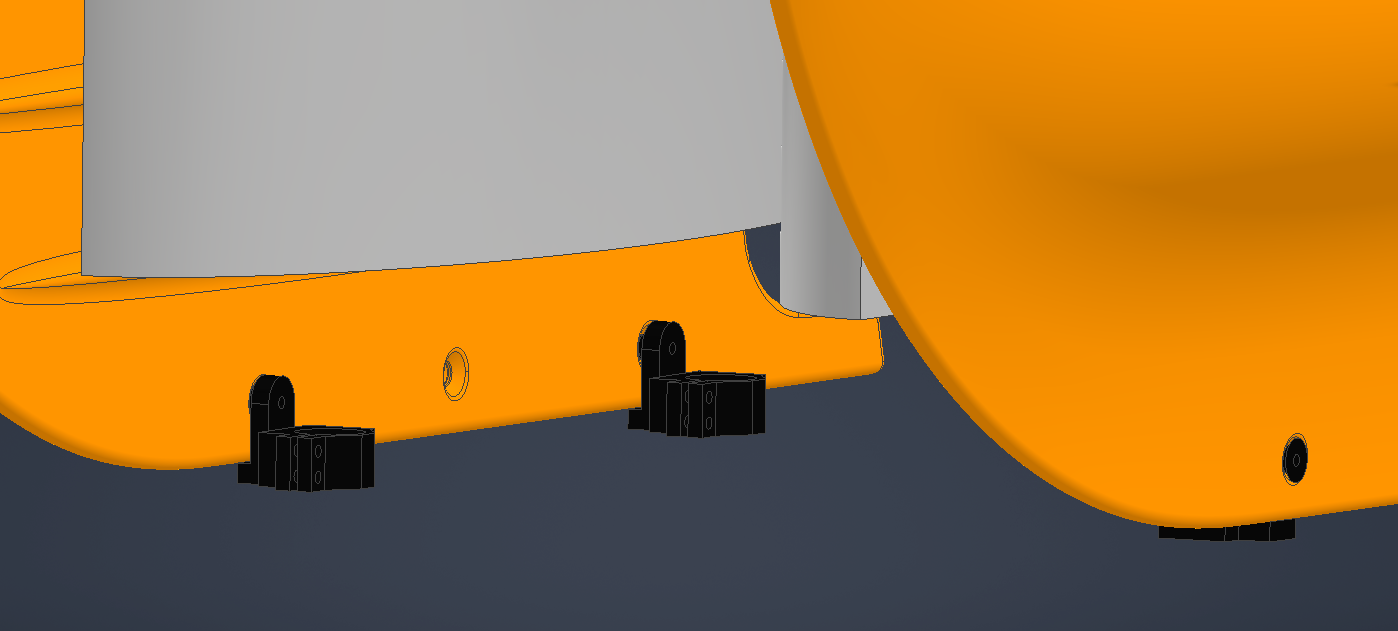
Hydrophone Mounting
To perform underwater detection, the team decided to use hydrophones on the USV. Mounts were designed for them using 3D printing, taking advantage of a detail in the vehicle's geometry, resulting in a lightweight, small structure that is easy to install or remove as needed.
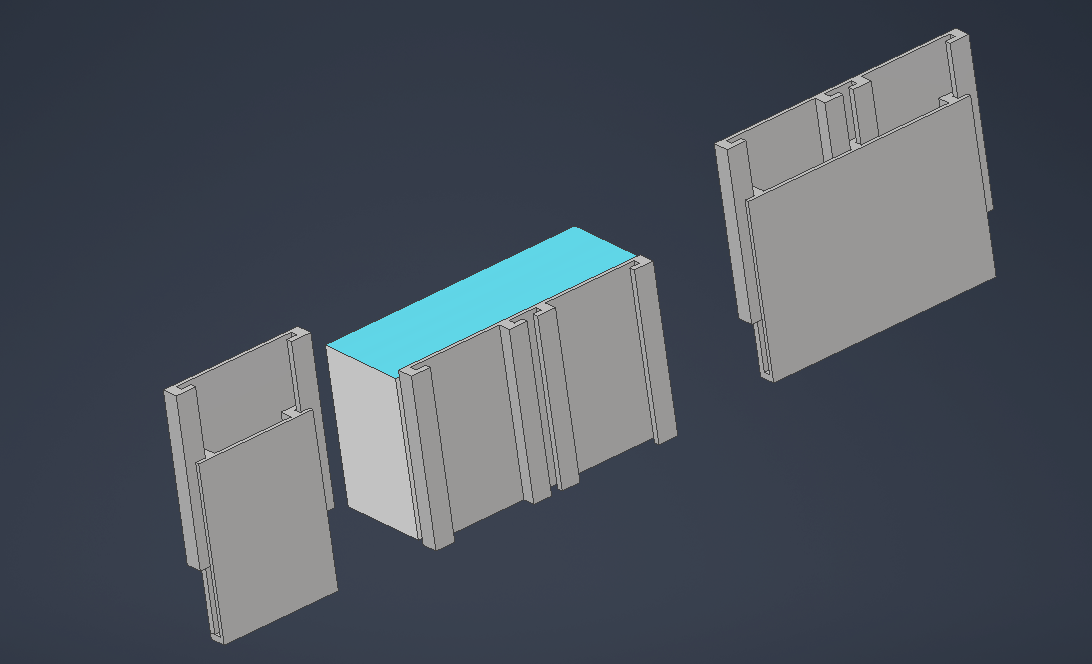
Hardware Mountings
Mountings were developed for the hardware components used by the team, which work thanks to a linear-guide mechanism that generates interference at its lower contact zone, ensuring a secure lock during operation while also allowing components to be removed conveniently when required. These mounts were developed through PETG filament 3D printing, ensuring sufficient strength while keeping a low weight.
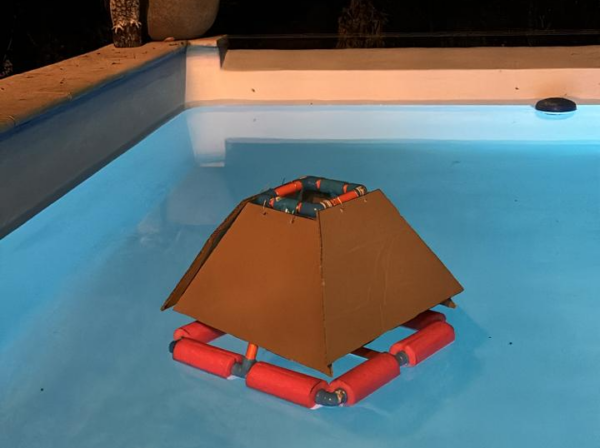
Buoys
To recreate a test scenario as similar as possible to what is expected at the competition, buoy models were manufactured based on those that would be used at RobotX, ensuring similar geometry for representative practice.
Sensors Tower
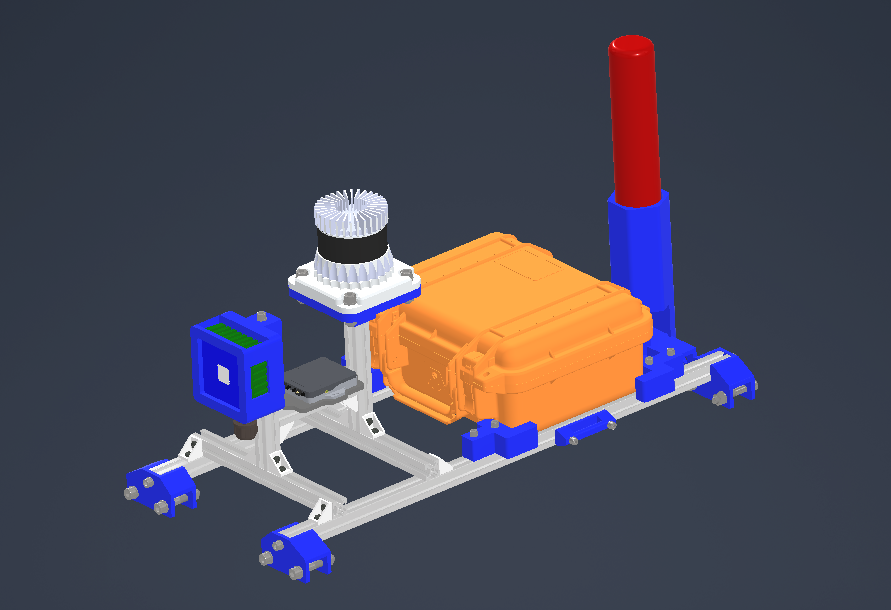
To achieve good detection using the sensors employed by the team, including a GNSS, a camera and a LiDAR, it was necessary to keep them in a suitable and secure position, for which a structure of aluminum profiles and 3D-printed parts was built, keeping a low weight while maintaining enough rigidity for good performance.
Thrusters Covers
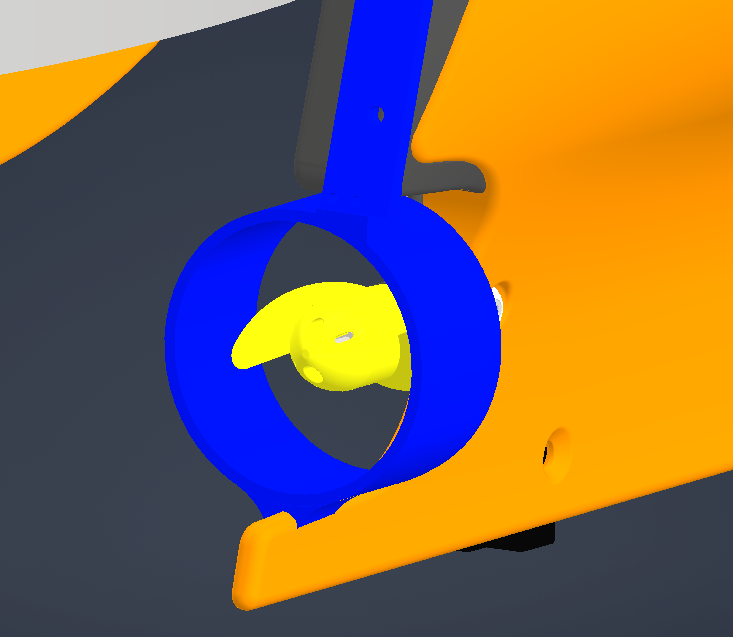
A cover was developed for the vehicle's thrusters to protect them from unwanted environmental agents, as well as to protect people or animals in their vicinity. These were made using PETG filament 3D printing, which allowed for lightweight parts with a geometry that could meet safety expectations without creating excessive drag that could compromise the USV's speed
Water Gun
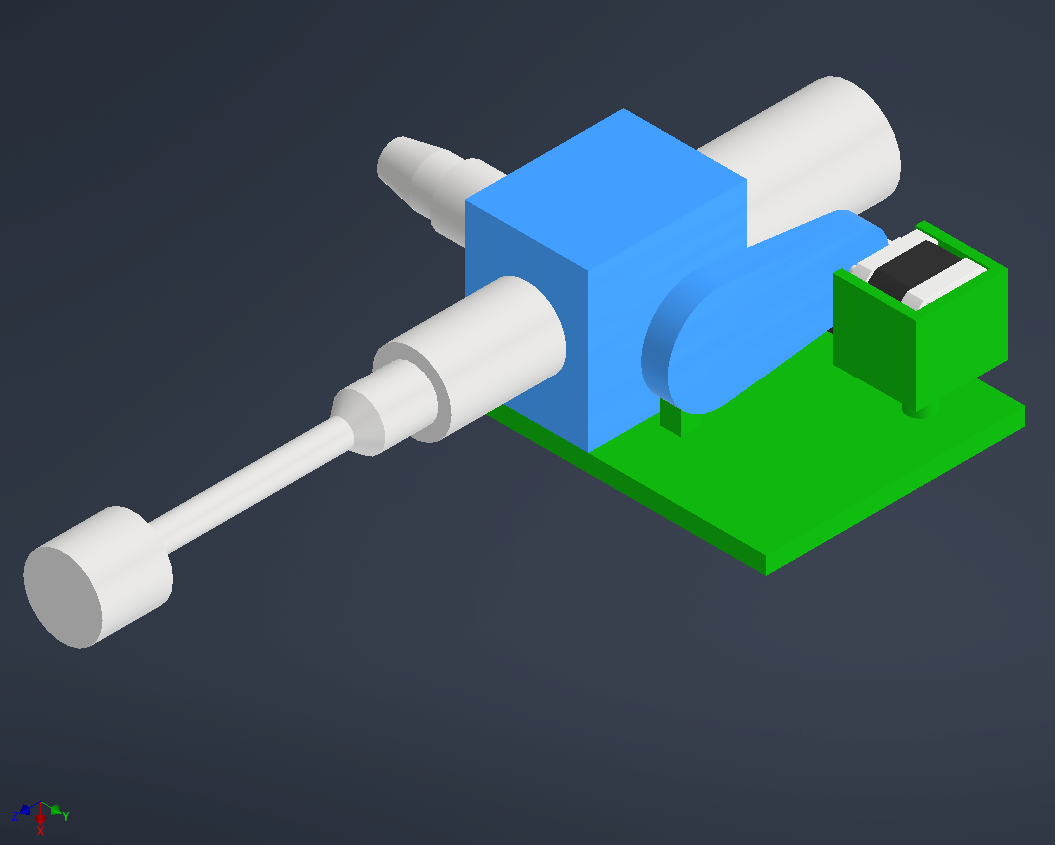
To complete Mission Task 3, the team designed a water cannon based on a modified wireless pressure washer with a remotely actuated trigger, mounted on the USV's sensor tower with two degrees of freedom: one tilt axis (0°–45°) and one horizontal pan axis (75°–105°). The mechanism is driven by two NEMA 17HS4401S stepper motors controlled by A4988 drivers and an ESP32 microcontroller, which receives targeting commands from the main USV control system via serial UART, operating through a mechanical reduction system. This configuration was chosen to hold the water stream steadily on target for several continuous seconds, as required by the task.