


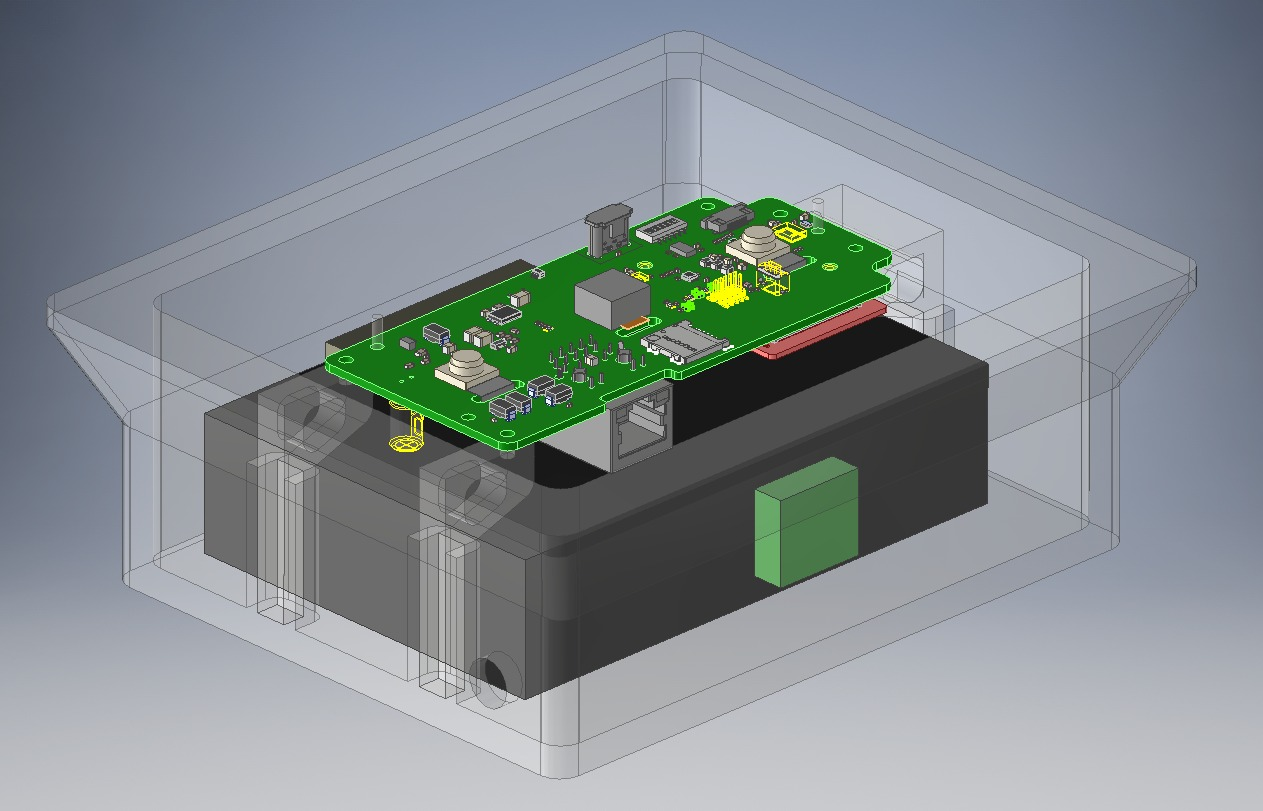
Camera Sealing
For Mission Task 2: Infrastructure Survey and Repair of RobotX 2026, the UUV required stereo vision to perceive depth, so the team took on the challenge of integrating the OAK-D PoE camera (previously used on the USV for RobotX 2024) into the BlueROV2. This camera has IP67 certification, which was not sufficient to meet the task's requirements, so it was necessary to design an underwater housing with greater watertightness, along with the integration of an internal PoE injector to raise the vehicle's power supply to the 48V required by the camera. To validate this highly compact system, multiphase thermal simulations were carried out, which confirmed its steady-state viability without the need to integrate a cooling system. Although the task was suspended in favor of the commercial MarineSitu C3 solution, the development gave the team valuable knowledge in structural watertighting and low-cost underwater electronic architecture.
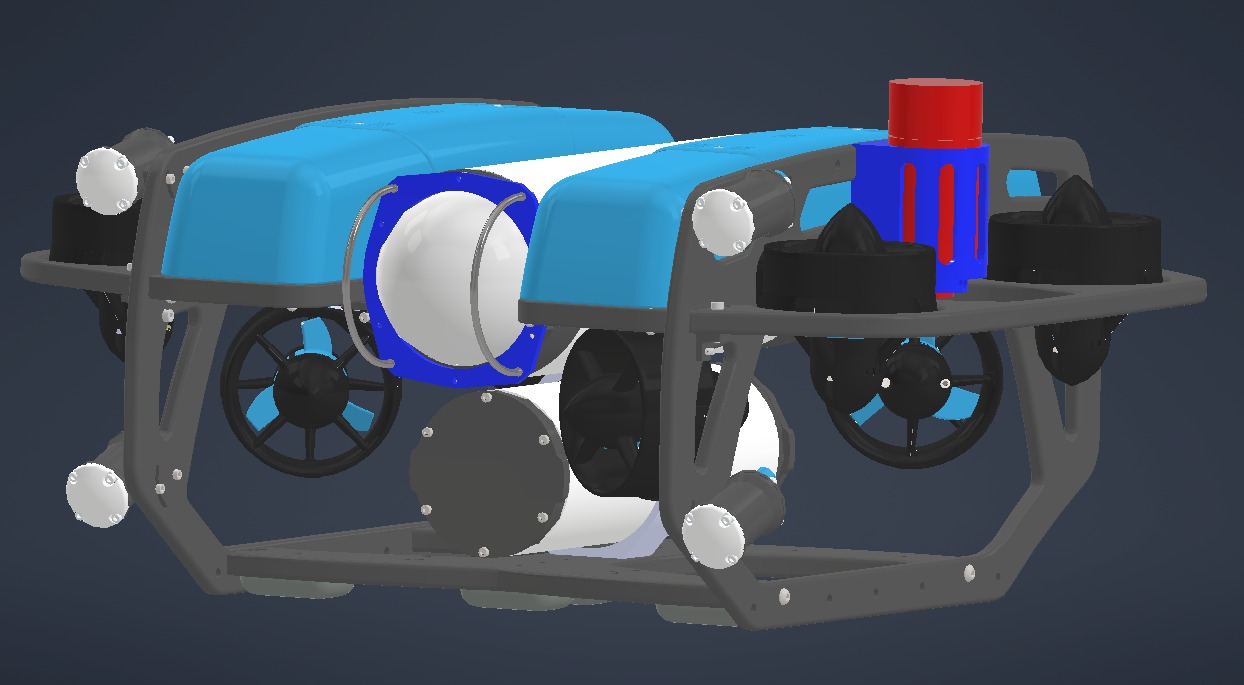
Mono Camera Protection
The operation of the UUV and its transport between locations during field tests involves potential impacts on the vehicle. For this reason, it is necessary to protect the front dome of the BlueRov2, which houses the monocular camera. Several design iterations were developed for this purpose, ranging from transverse protective bars that guard against strong impacts, to arc-shaped bars positioned above the dome that aim to avoid interfering with the camera's field of view. The design is currently still being iterated on, given the possibility that the camera may pivot and modify its field of view.