
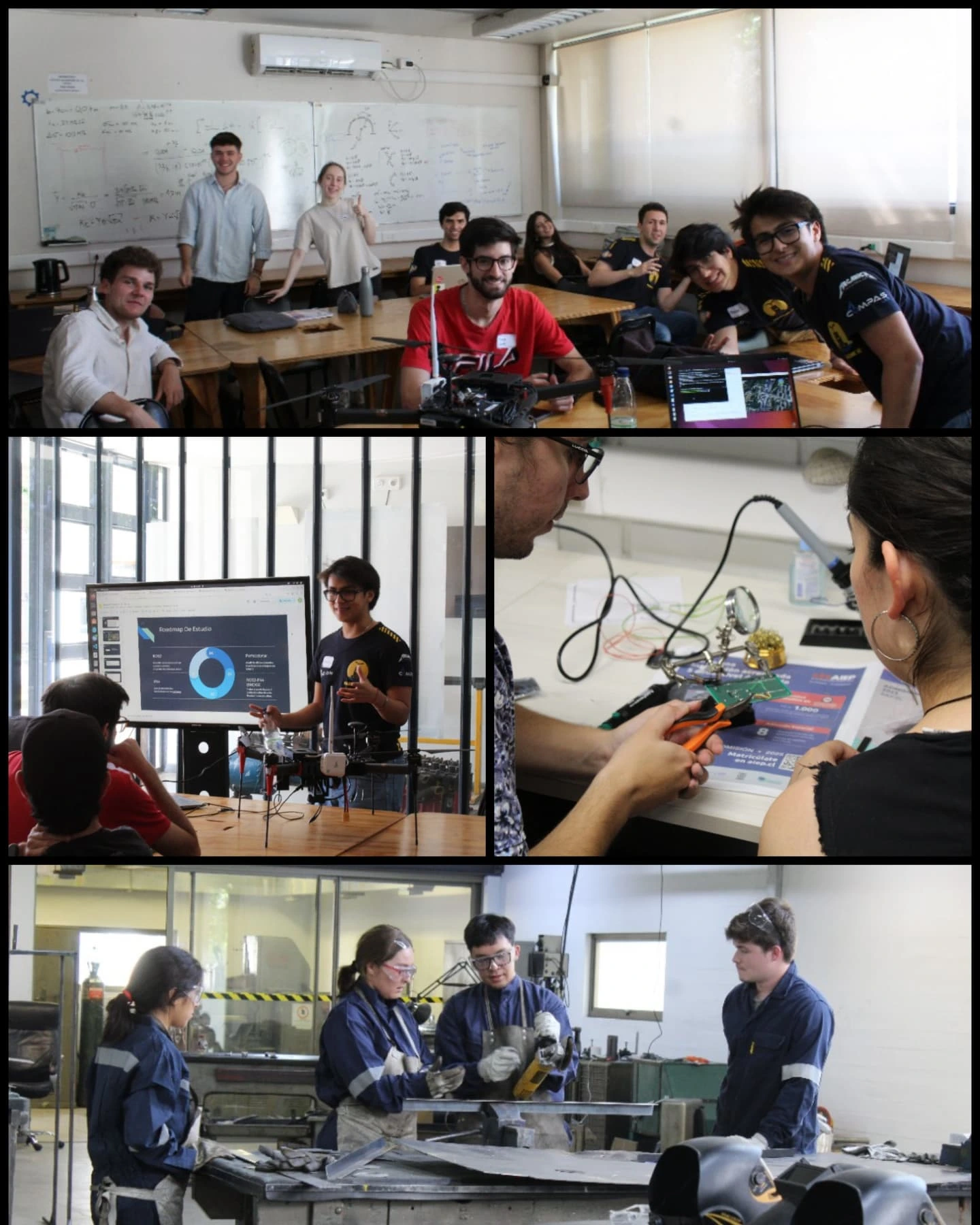
In early 2025, we hosted a bootcamp to onboard new recruits, build team spirit, and teach cross-disciplinary skills. Hands-on sessions covered soldering, ROS 2, PID control, and drone flight. The experience culminated in a mini-WAM-V competition, where recruits assembled and wired 3D-printed, ESP-controlled boats using custom PCBs they soldered themselves.
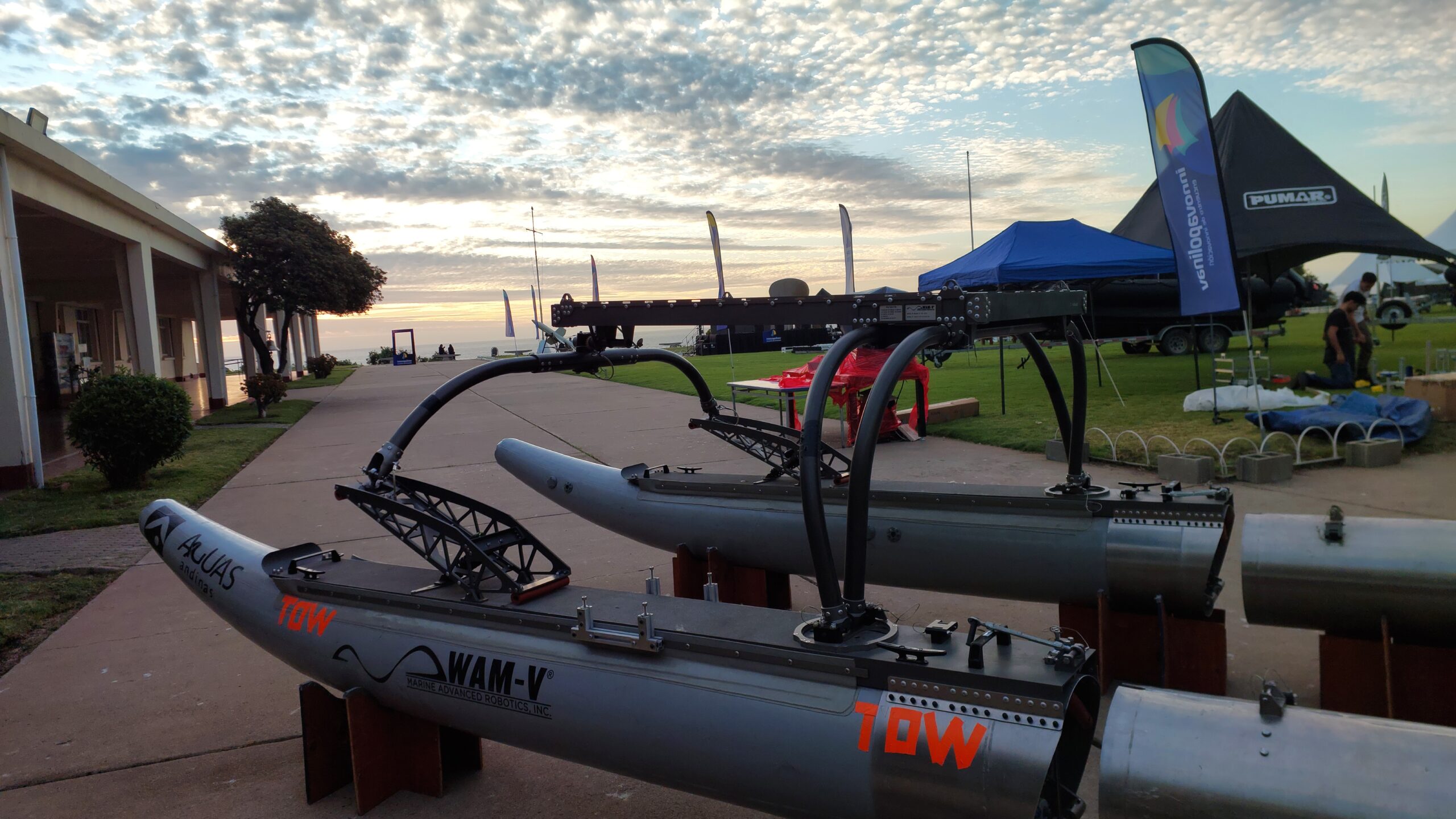
A major milestone this year was presenting our project at the country's most relevant naval research and innovation convention. At this exhibition, we engaged with high-ranking commanders of the Chilean Navy and government research departments. This opportunity allowed us to forge strategic alliances and establish our presence not just as a university student team, but as a formal autonomous research project.
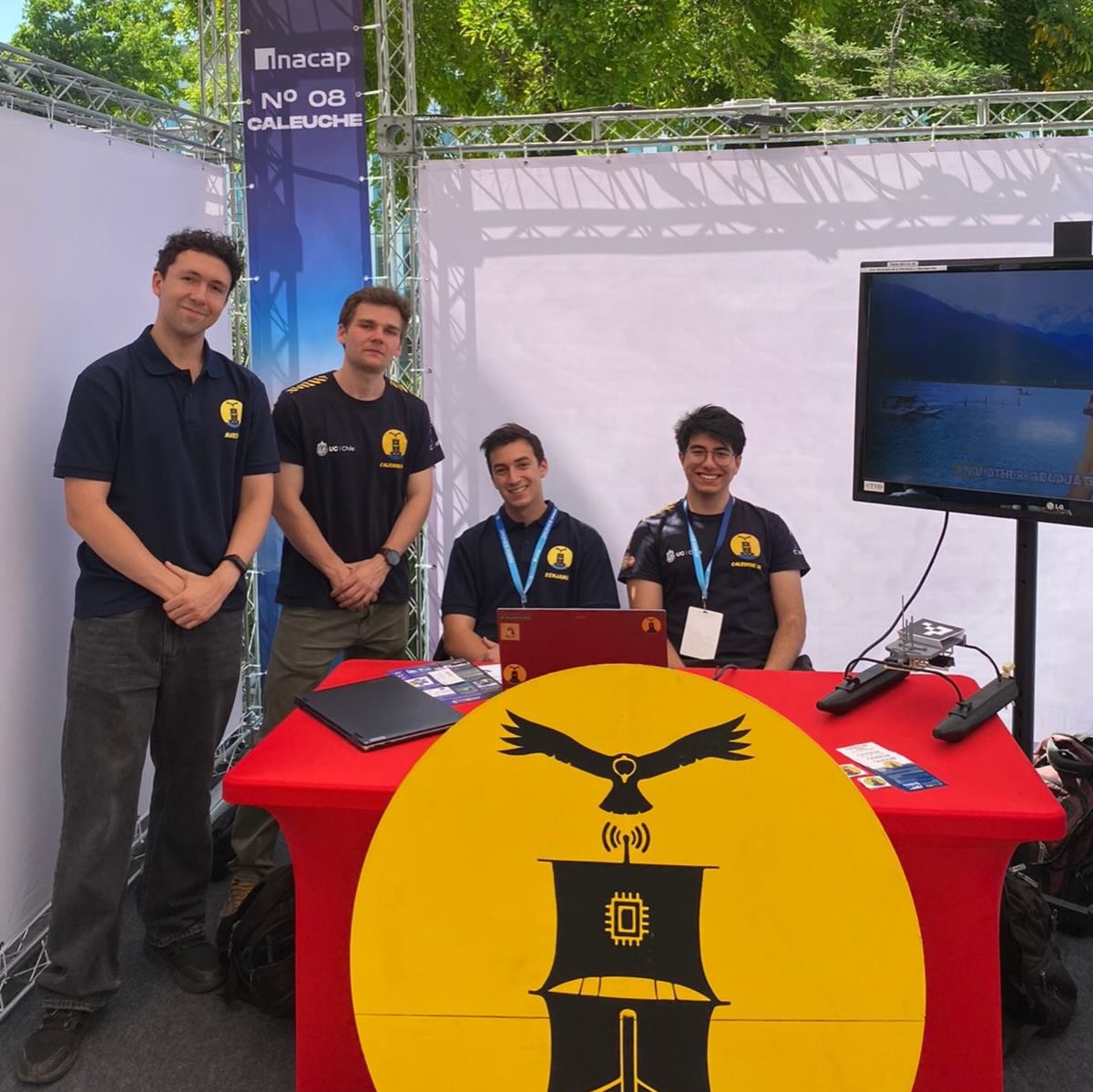
Although we are primarily a maritime robotics team, a key component of our project is the autonomous aerial presence provided by our UAV, Chucao. Our development made a strong impression on the Chilean Air Force and major aerospace companies, earning us an invitation to exhibit at the largest national drone expo. This participation demonstrated our advanced research and engineering capabilities in both the maritime and aerial domains.
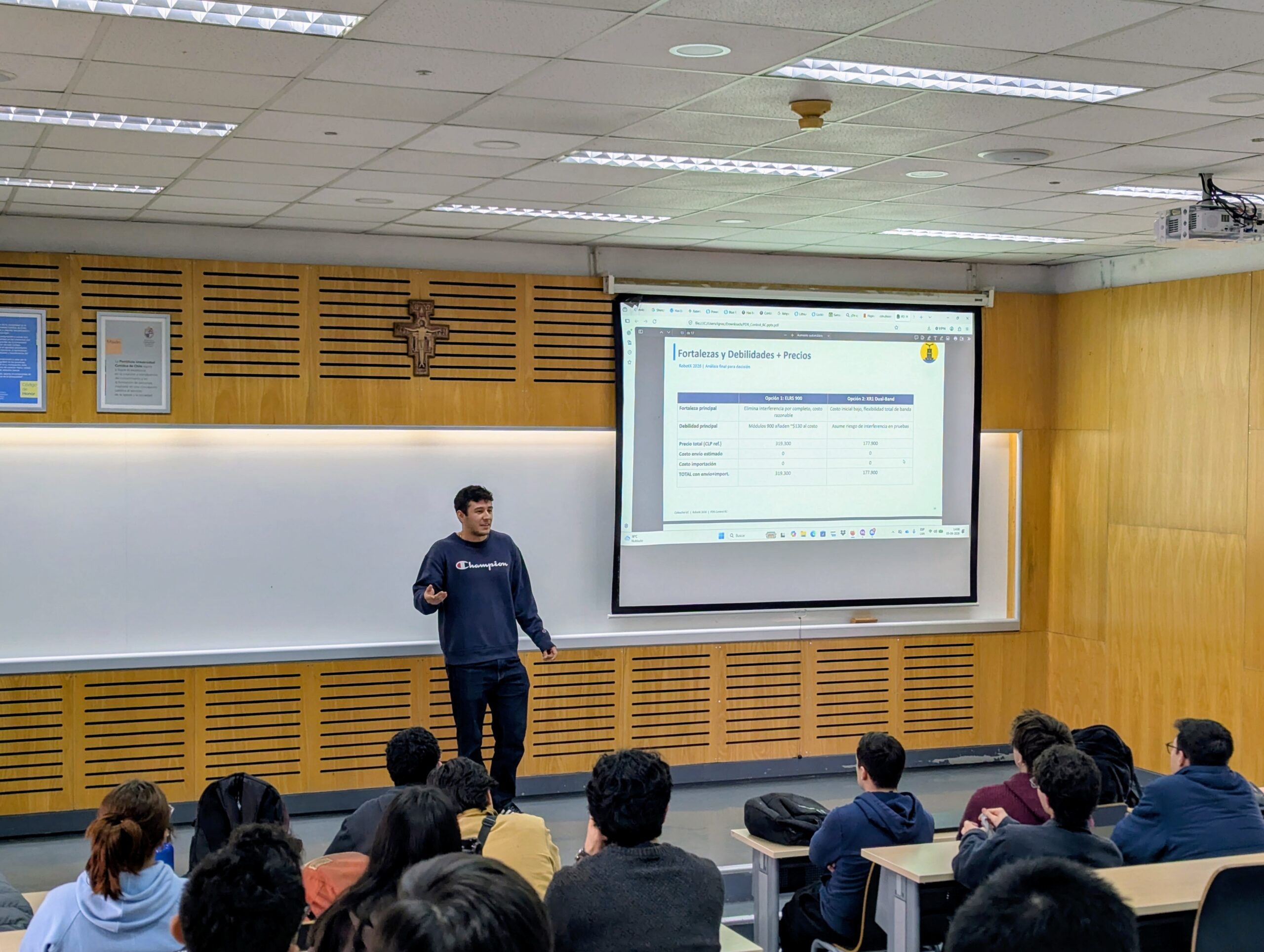
As the RobotX Competition made a major shift toward smaller WAM-V platforms and incorporated a new vehicle for the underwater domain, we were forced to rethink and redesign a major part of our system. This process involved multiple Preliminary Design Review (PDR) presentations from each sub-team and heavily leveraged the modularity of our software architecture.
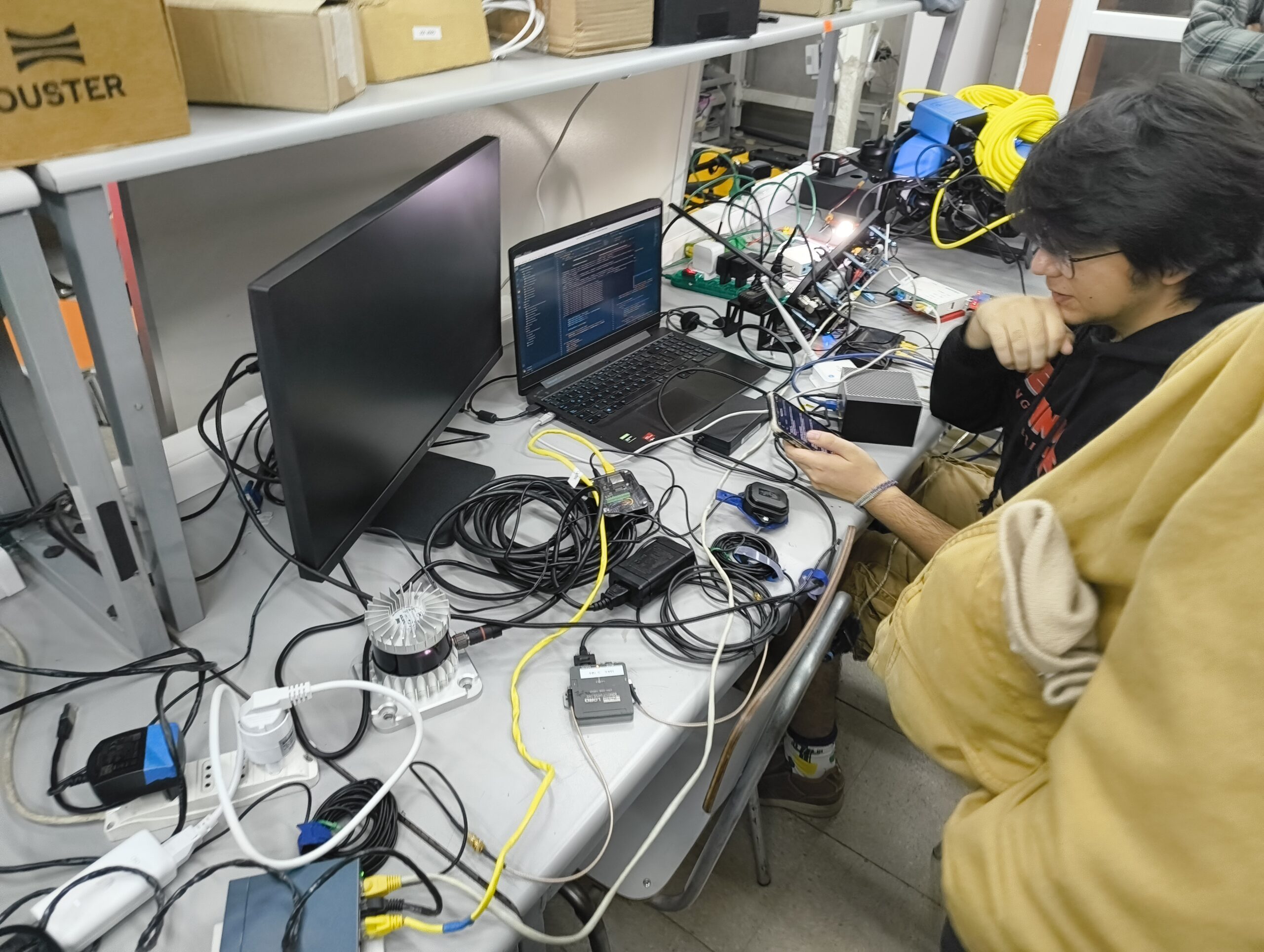
During this phase, the primary objectives were to conduct the initial assembly and system analysis for both the BlueBoat and BlueROV2, as well as assemble a drone to validate the pre-existing system's functionality. As a result, the complete assembly of the BlueBoat was achieved, and the teleoperation and calibration tests for the USV were successfully executed. Future work will focus on finalizing the UUV's assembly and optimizing its electrical setup.
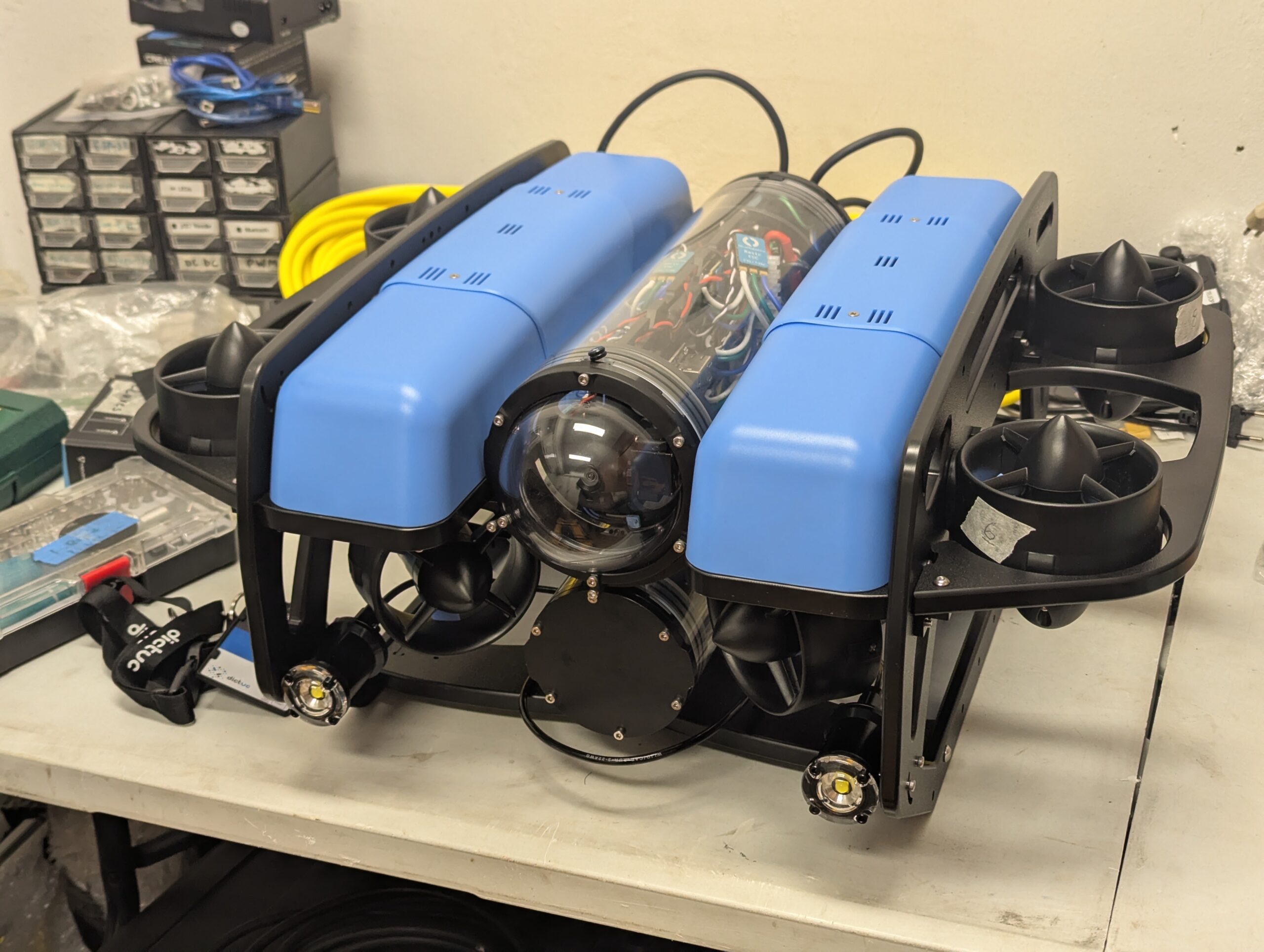
The primary objective for this phase was the complete assembly of the BlueROV2. Key achievements included the successful powering and teleoperation of the UUV, as well as testing the cameras and lights through BlueOS. Additionally, ROS 2 topics and services were successfully reviewed within BlueOS on the UUV. Moving forward, future work will focus on optimizing the assembly time for the ROV2.
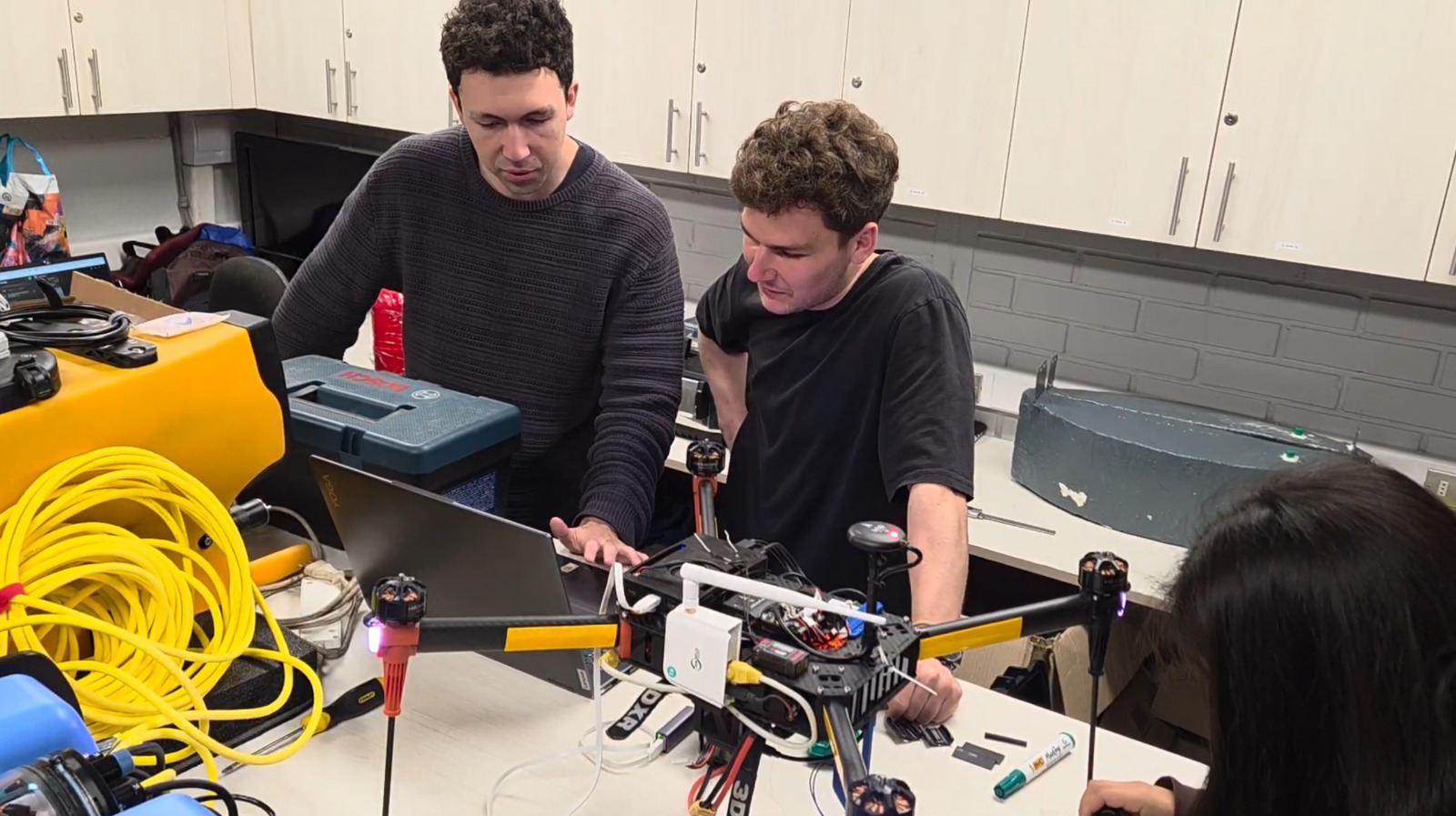
The primary objectives for this session were to evaluate the assembly performance of all three vehicles simultaneously and to connect the USV, UAV, and UUV to the same network. Key achievements included training new team members to assemble the three systems, successfully debugging sensor connections to BlueOS via ROS 2, and gaining a deeper understanding of BlueOS topics and services. Moving forward, future work will focus on improving the logistics of reaching testing locations to maximize operational time, as well as debugging the camera and LiDAR drivers.
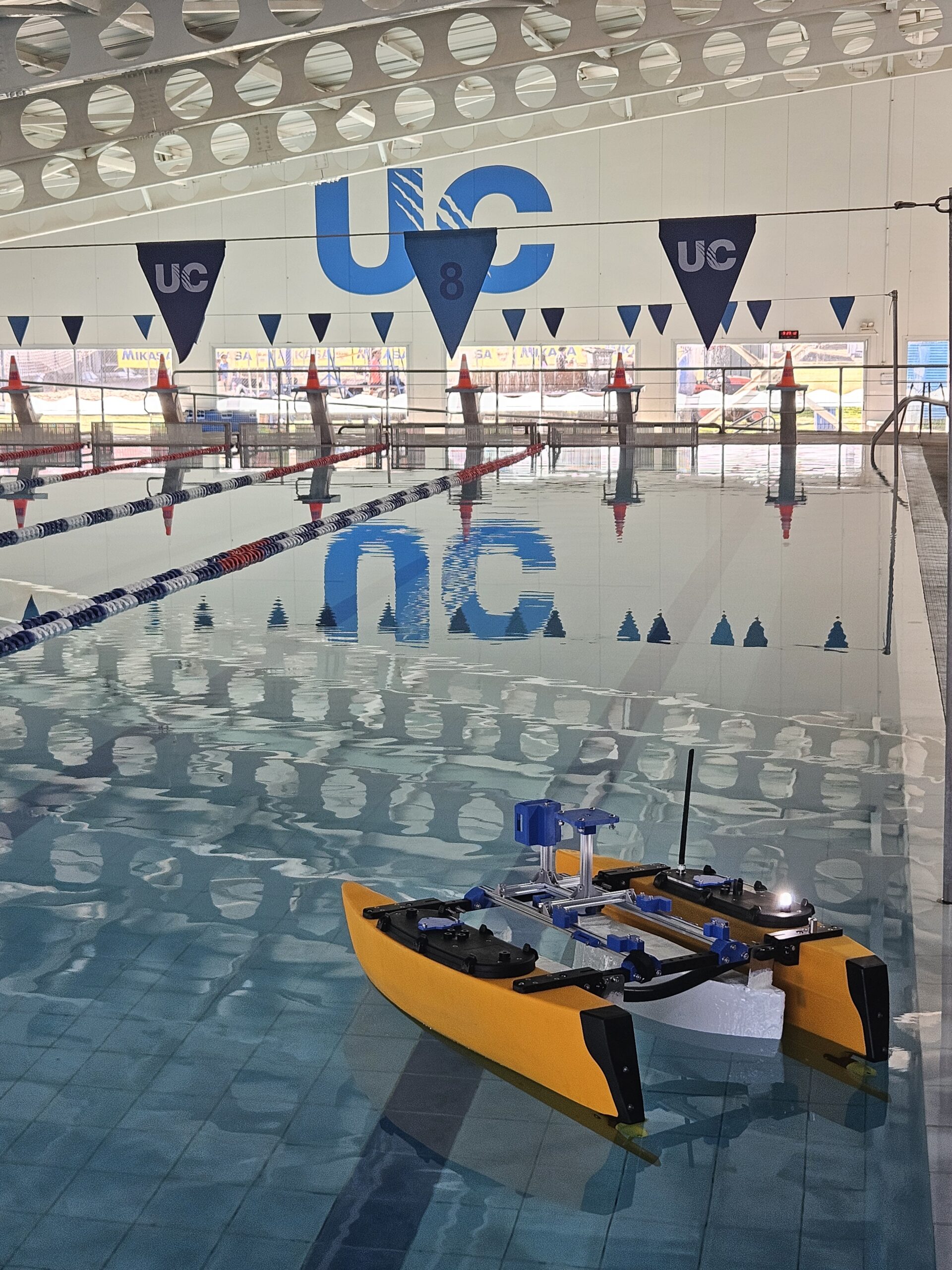
The primary objectives for this session included teleoperating the USV via QGroundControl in the water, validating both the payload extension system and the new sensor tower, and conducting the initial integration of sensors and computers on the BlueBoat. Key achievements involved successful teleoperation by the team members, assessing the buoyancy, weight, and movement of the USV with the payload extension, recording a ROSbag from the internal sensors, and successfully arming and disarming the vehicle via ROS in the water. Moving forward, future work will focus on achieving motor control through ROS 2, developing a solution for the 5-second delay between BaseStation disconnection and the BlueBoat stopping, fixing a leak in the payload extension, and finalizing the electrical distribution system.
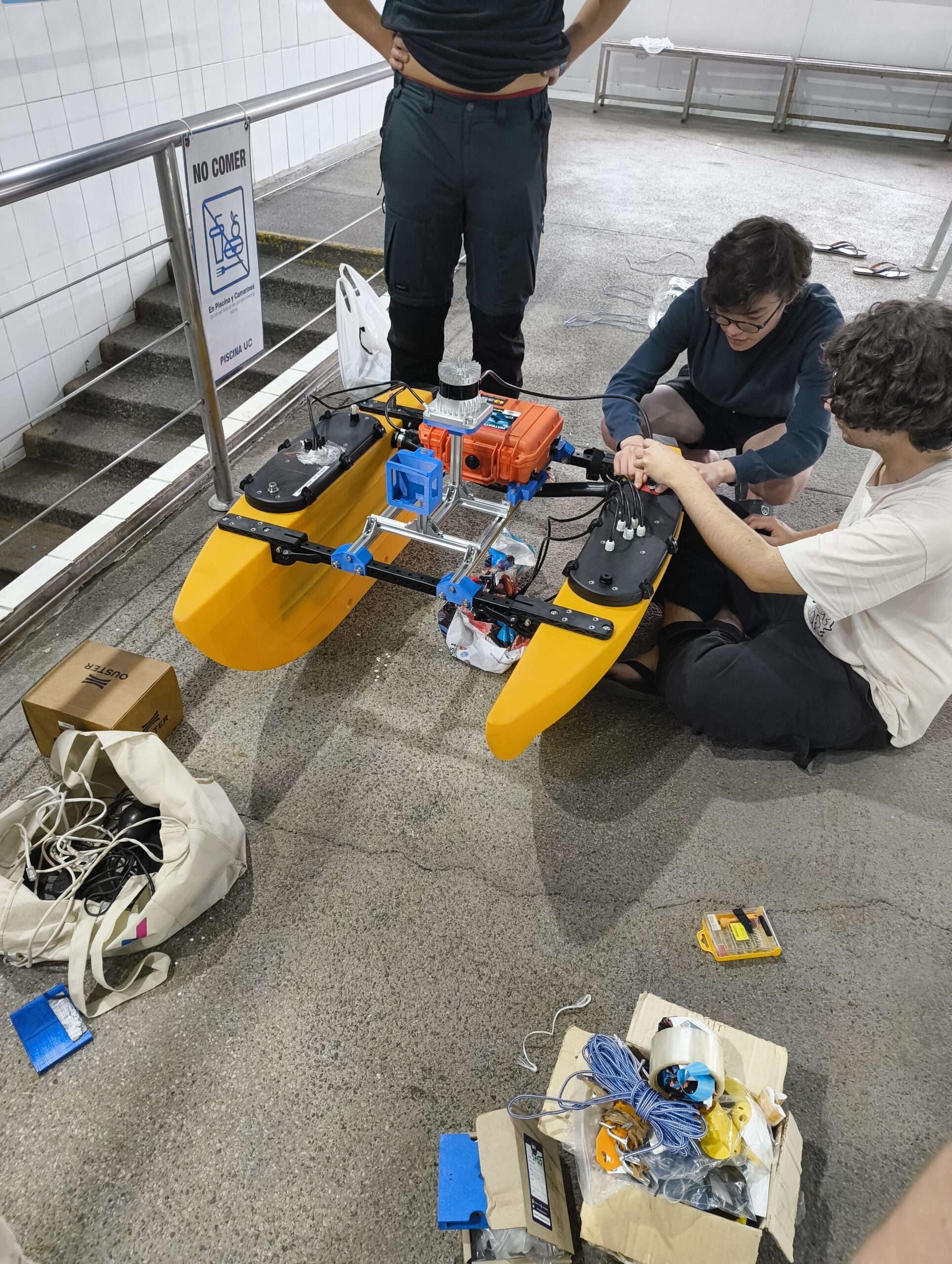
The primary objectives for this session were to teleoperate the BlueBoat via both ROS 2 and RC, and to validate the electrical distribution system for all sensors. Key achievements included the successful validation of the electrical setup with all sensors and actuators, as well as confirming the system's modularity, which enabled on-the-fly modifications during testing. Furthermore, RC teleoperation was achieved successfully, albeit with a slight response delay. Moving forward, future work will focus on improving the waterproofing of the electrical connections to the BlueBoat's compartments, developing easily accessible emergency stops, and resolving the RC control delay.
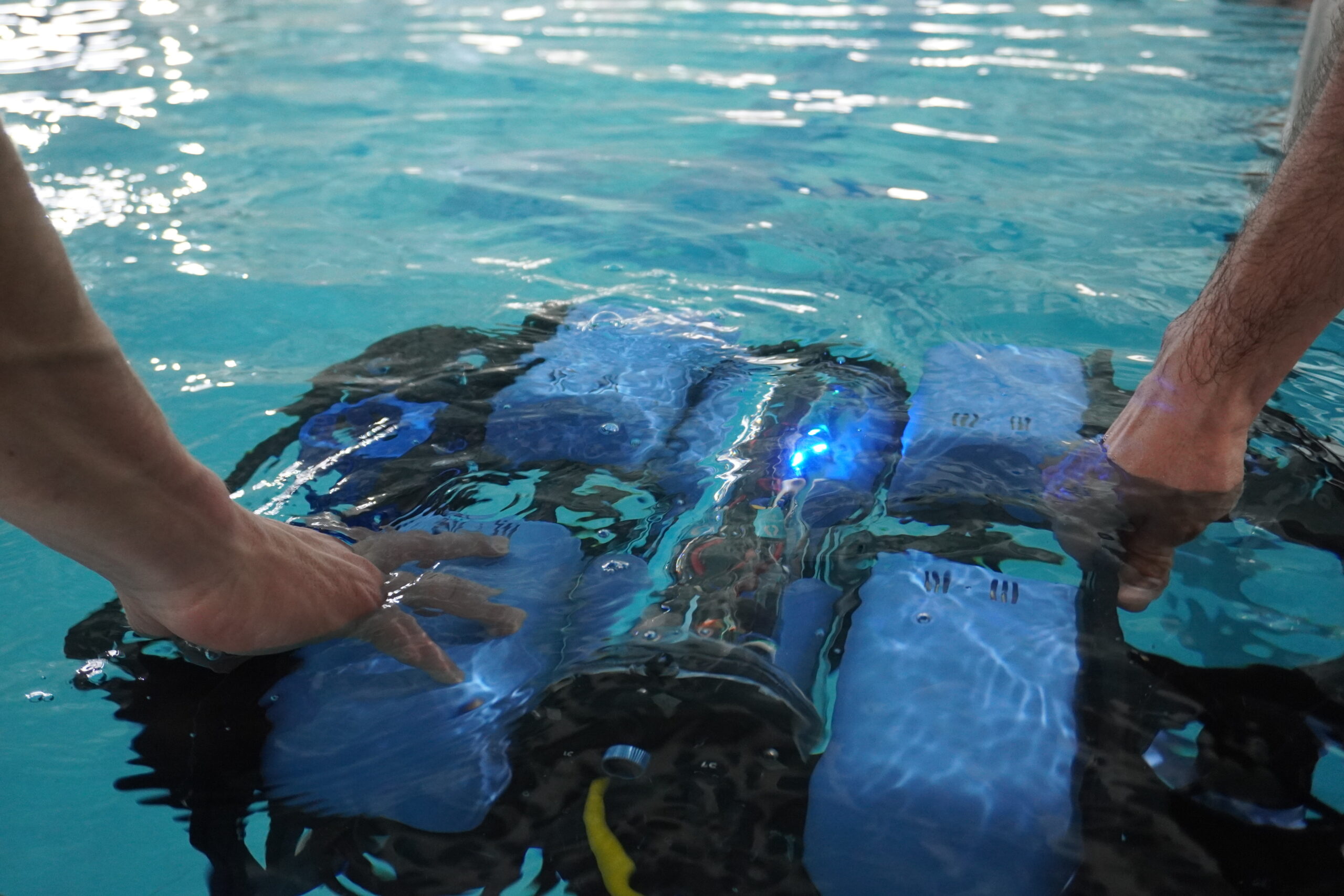
The primary objectives for this session included executing the complete USV software system via ROS 2 (involving the Status Light, Nav2, sensor drivers, Jetson, and Raspberry Pi), navigating the USV via Nav2, and testing its Proof of Readiness routine. Additional goals were to perform in-water teleoperation and waypoint navigation for the UUV, as well as record ROSbags for the cameras, LiDAR, and IMUs of both vehicles. Key achievements were the successful teleoperation of the UUV via QGroundControl and the successful validation of its watertight seals. Moving forward, future work will focus on repairing a new leak in the payload extension, fixing the Fathom-X interface connections, and reinstalling the corrupted firmware on the Navigator's SD card
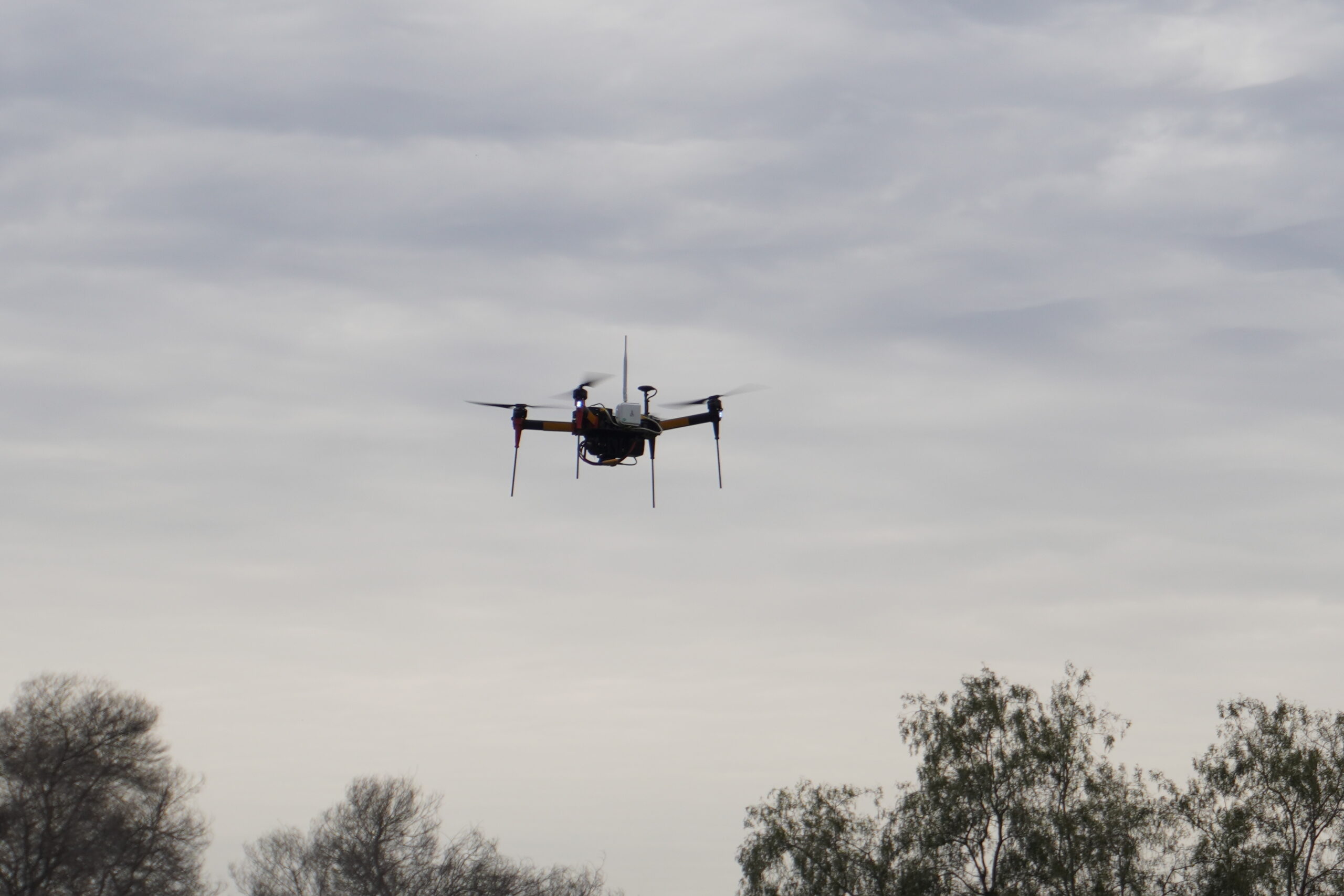
The primary objectives for this session were to achieve USV teleoperation via RC control without delay, perform autonomous navigation using Nav2, validate the new Kill Switch system, and execute the Proof of Readiness for both the USV and UAV while recording a ROSbag. Key achievements included the correct operation of the RC control, successful autonomous navigation of the USV via Nav2, and confirming that the Kill Switch was fully operational. Additionally, the USV's Proof of Readiness was fully completed, while the UAV's was partially completed. Moving forward, future work will focus on reducing the assembly time for the USV.
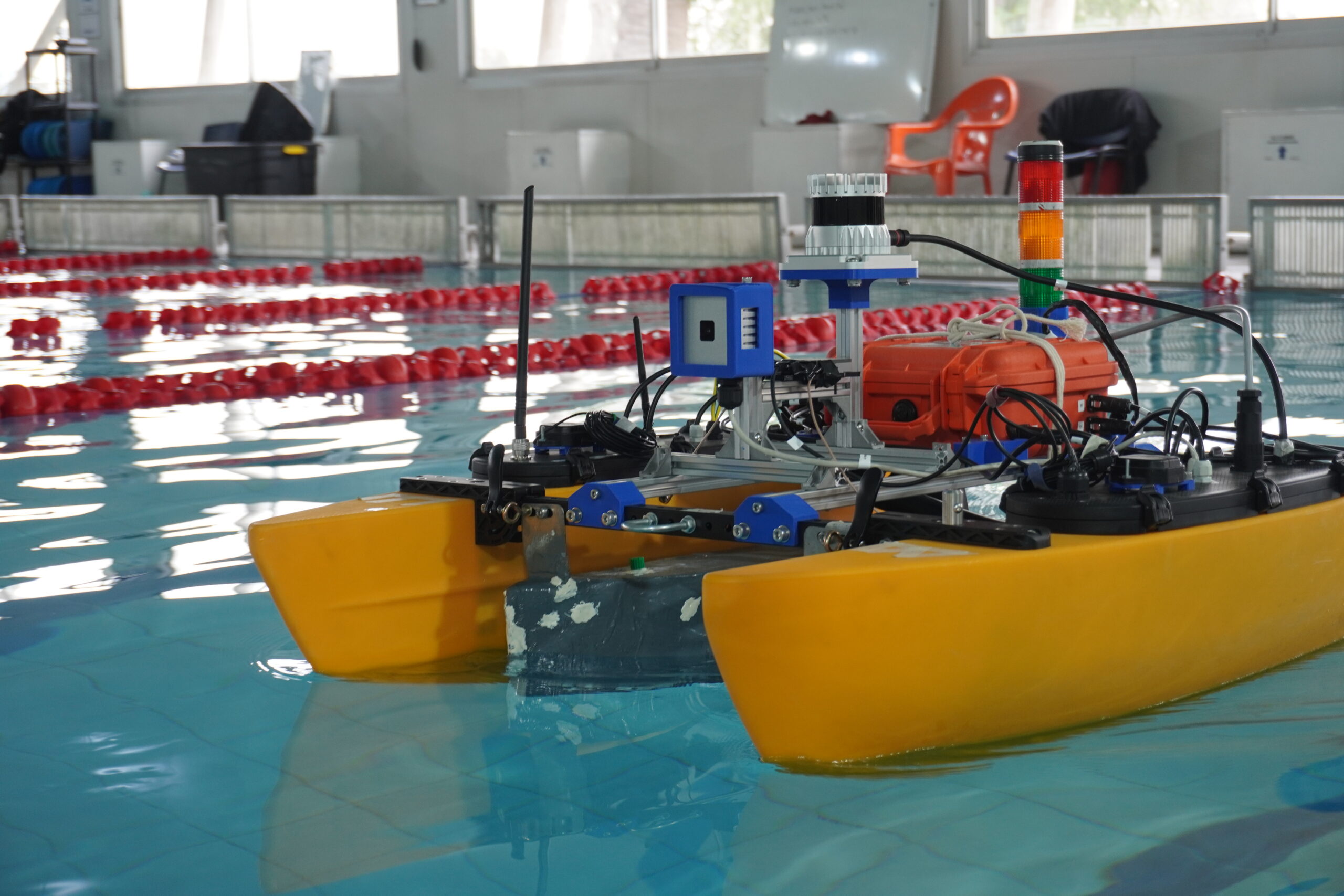
The primary objectives for this session were to improve the USV system setup time and conduct a backup Proof of Readiness for the USV. Key achievements included reducing the setup time to just 45 minutes and successfully recording half of the routines for the backup Proof of Readiness. Moving forward, future work will focus on identifying and correcting the USV's deviation during navigation, as well as developing a new debugging methodology for software testing.
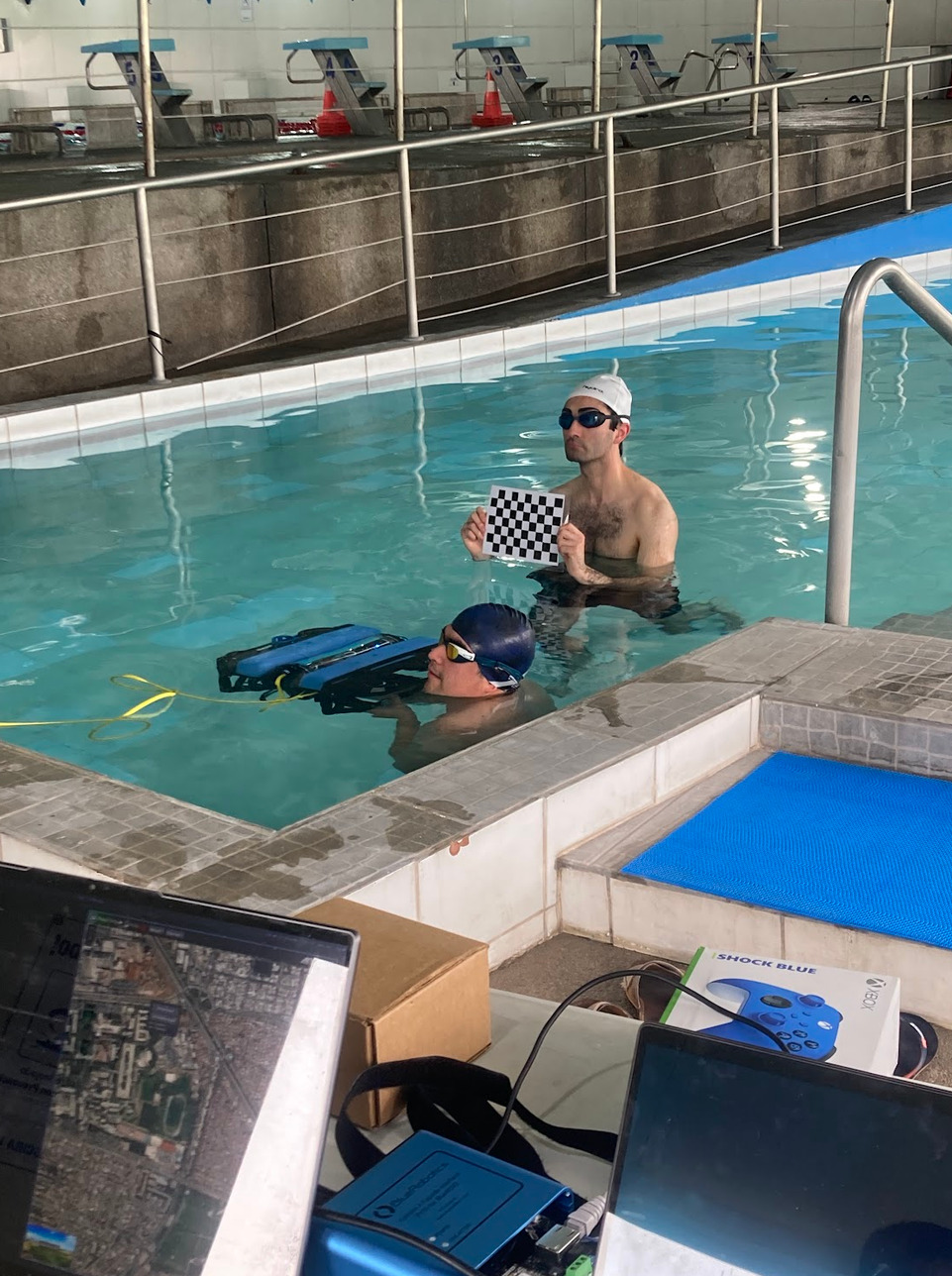
The primary objective for this session was to record a ROSbag for camera calibration and AprilTag detection on the UUV. This was successfully achieved, ensuring the necessary data was gathered for both tasks. Moving forward, future work will focus on reducing the UUV setup time, correcting the USV's navigation deviation—as time constraints prevented the testing of a proposed solution—and strengthening the UUV's motor teleoperation.